
Food labelling and print preparation
Hong Kong Nutrition Labelling and Label Printing Preparation Guide
For Hong Kong prepackaged food, nutrition labelling is not just a table added at the end of the packaging design. Food brands, OEM manufacturers, importers and packaging teams need to confirm the official requirements, nutrition data, claims, readable artwork, label material and print workflow before routine production.
Start with the product case and nutrition source
Before printing labels, confirm whether the product is covered by Hong Kong nutrition labelling rules, whether any exemption may apply, and what nutrition data source supports the values printed on pack.
Make the panel readable before it reaches production
Nutrition tables, ingredient lists, date marks and manufacturer details all compete for space. The finished pack needs enough contrast, spacing and print quality for real handling conditions.
Connect artwork, materials and operator workflow
Packaging teams should lock the approved version, label stock, ribbon, printer setup and sample approval process so operators can print the correct label repeatedly.
Official source first
Hong Kong nutrition labelling basics: decide the product case before building the label
Hong Kong nutrition labelling is mainly governed by the Food and Drugs (Composition and Labelling) Regulations (Cap. 132W) and explained through CFS guidance. The checkpoints below help food and packaging teams prepare for printing; final product decisions should still be checked against the latest official source and professional advice.
| Checklist item | Why it matters | Printing impact |
|---|---|---|
| Is the product prepackaged food? | General prepackaged food normally needs nutrition labelling unless a specific exemption or special rule applies. | Do not finalise the label size or artwork until the product case is clear. |
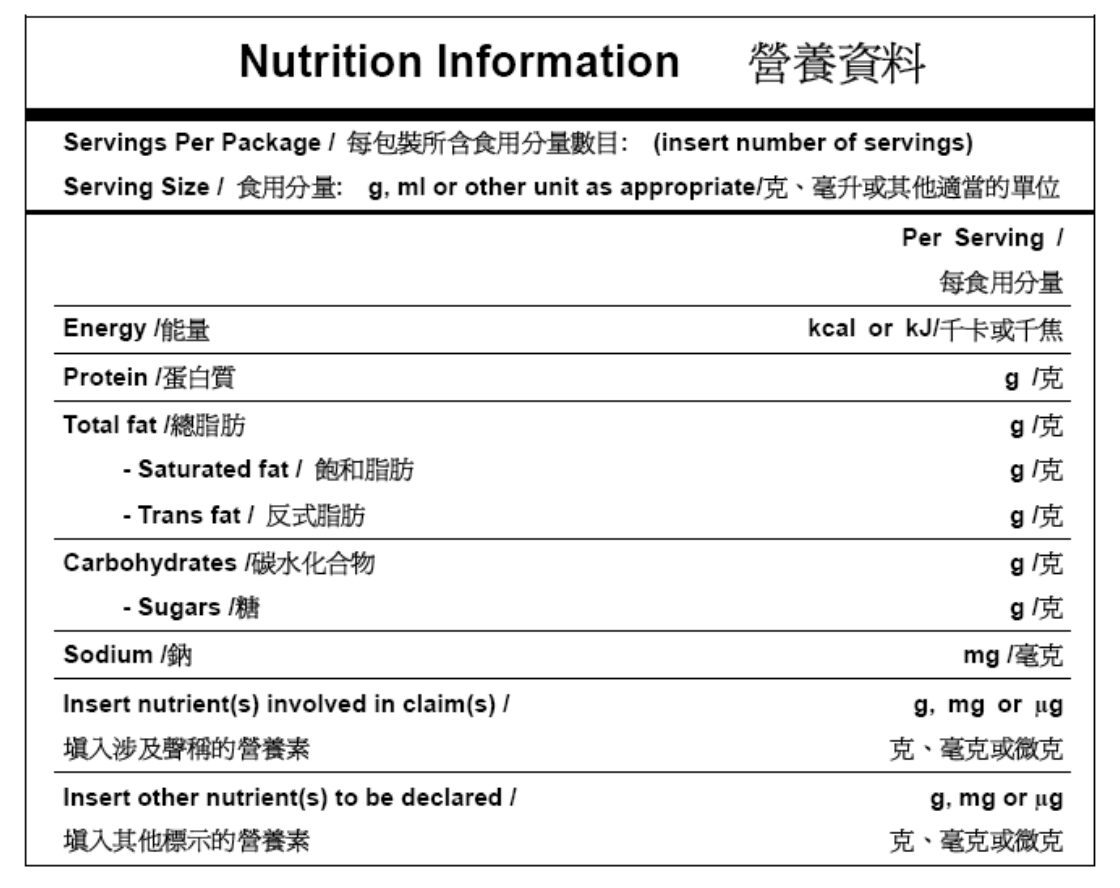
| 1+7 nutrition information | The common core declaration is energy plus seven nutrients: protein, carbohydrates, total fat, saturated fat, trans fat, sodium and sugars. | The nutrition table needs enough horizontal and vertical space for labels, units and values. |
| Per 100 g / 100 mL or per serving | The basis of expression affects how buyers read the product and how the table is laid out. | Artwork needs a consistent header, unit treatment and line spacing. |
| Nutrition claims | Claims such as low sugar, high fibre or similar statements may require extra nutrient declaration or checks. | Claim wording and the nutrition table should be reviewed together before print release. |
| Exemptions and changes | Small-volume or other exemptions are conditional and can be affected by claims, distribution or product changes. | Keep version control so the label can be updated when the product situation changes. |
Turn nutrition data into a controlled print file
Food brands, OEM teams and packaging suppliers should keep nutrition values, claim wording, product version and approved artwork together. This makes it easier to check whether the label being printed matches the latest product data and approved design.
- Confirm the nutrition data source, such as laboratory results, supplier information, formulation data or a documented calculation method.
- Check whether claims require additional nutrients or related values to be included.
- Record who approves label artwork and how operators know they are using the current version.
Do not treat nutrition labelling as a last-minute layout task
When nutrition values, claims and packaging design are handled separately, labels are more likely to be corrected manually at the last stage. A controlled workflow keeps compliance source checks, artwork and print production aligned.
Claims and exemptions
Nutrition claims, exemptions and product changes should be checked before printing
Claims, exemption status, serving size and product formulation can all change the label work. Packaging teams should not separate these decisions from the printing process, because a small wording or formula change can affect the table and the label version.

Claims are not only marketing copy
When a nutrition or related claim appears on a label or promotion, the nutrient involved may need to be declared. Fat-related claims may also affect cholesterol declaration. Check the latest CFS guidance before printing.
Exemption does not remove process control
If a small-volume or other exemption is relevant, keep the basis documented. Do not assume the same label remains suitable after distribution, claim, packaging or formula changes.
Version control protects production
Operators need to know which SKU, artwork, date format, barcode field and label roll should be used. Clear version control reduces rework and wrong-label risk.
Buyer-facing reminder
Before ordering labels or setting up a printer, prepare the product list, package size, label dimensions, storage conditions, claim wording and expected print volume. These details affect printer choice, label stock, ribbon and workflow design.
Legible labels
Nutrition labels must remain readable after printing, packing and handling
CFS legibility guidance points to practical factors such as text size, x-height, spacing, contrast, background and print surface. Even if the nutrition information is correct, the label still needs to be readable on the real packaging after printing and application.


Check actual printed text
Print a sample at real size and read it on the packaging surface. Do not approve only from a screen proof.
Review background and finish
Transparent, glossy, dark or curved packaging can reduce readability even when the artwork looks clear.
Match the label to the environment
Frozen, chilled, moist, oily or frequently handled packs may need a different face stock, adhesive and ribbon.
Check print durability
Test smudge resistance, abrasion, adhesion and barcode scanning where the label carries batch or barcode data.
Printing workflow
Turn requirements into a six-step nutrition label printing workflow
A practical nutrition label printing workflow connects the official source, artwork approval, label material, print settings, sample testing and future revision control. This helps the packaging team reduce manual edits and wrong-version risk.

| Step | What to confirm | Printing decision |
|---|---|---|
| 1. Product scope | Prepackaged status, exemption position and claim usage. | Decide whether the label needs a full nutrition table and which artwork fields are required. |
| 2. Nutrition data | Values, units, serving basis and calculation or laboratory source. | Lock the table structure and approval workflow. |
| 3. Artwork layout | Panel size, language arrangement, barcode fields and date mark position. | Prepare a label master that operators can print without manual editing. |
| 4. Label and ribbon | Packaging surface, storage condition, handling and durability needs. | Select label stock, adhesive and ribbon that fit the real environment. |
| 5. Printer setup | SKU count, print volume, label width, resolution and connection method. | Choose desktop, industrial or other suitable printing hardware and software workflow. |
| 6. Sample approval | Readable text, adhesion, smudge resistance and barcode scan quality. | Approve the sample before production and keep a change-control path for future updates. |
Easy Scan support
Easy Scan helps turn food nutrition labels into practical printing setups
Easy Scan does not replace legal or compliance advisers. We support the execution side: label printers, label material, ribbons, barcode printing, sample testing, system connection and technical support for Hong Kong food and packaging teams.
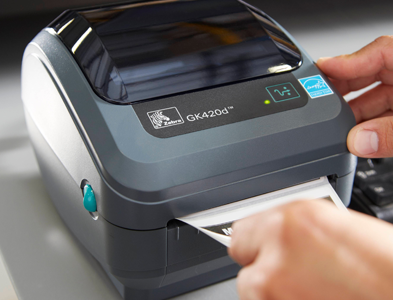
Label printer and template workflow
Compare print volume, label size, resolution, connection method and operator workflow before choosing desktop, industrial or other suitable print options.

Label and ribbon matching
Test paper labels, synthetic labels, cold-chain labels, abrasion needs and thermal-transfer ribbon combinations so the label remains clear after packing and delivery.

Site rollout and technical support
Set up printers, connect label software or existing systems, test samples, train operators and support label version changes.



Official references
Use the latest CFS and legislation sources before final artwork approval
This article is an operational and printing workflow guide based on official-source review. It is not legal advice. For products involving nutrition claims, exemptions, special packaging, export markets or enforcement risk, check the latest official documents and professional advice before release.
FAQ
Nutrition label printing FAQ
Does a nutrition label always need to be printed as a table?
A structured table is usually easier to read and review. The exact format should follow the applicable CFS and legal requirements for the product.
Can a small-volume exemption product ignore nutrition labelling work?
No. Exemptions are conditional and can be affected by claims or product circumstances. Keep the product decision, label version and packaging workflow documented.
Can nutrition labels be printed on ordinary paper labels?
Sometimes, but the material must fit the real storage, handling and packaging surface. Frozen, oily, moist, curved or glossy packs may need another label stock and ribbon combination.
Should food teams print nutrition labels in-house or use pre-printed labels?
It depends on SKU count, batch changes, print volume, label size, operator workflow and version-control needs. Easy Scan can help compare desktop, industrial and pre-printed label workflows.
Can Easy Scan confirm whether our nutrition data is legally compliant?
Easy Scan supports label printing, material selection, barcode printing and deployment. Nutrition data and legal compliance should be confirmed with the latest official sources and qualified advisers.
Next step
Need a practical nutrition label printing workflow for food packaging?
Send Easy Scan your packaging type, label size, expected print volume, storage environment and current label workflow. We can help you compare label printers, label material, ribbons and sample testing options.