
Label Material Selection for Hong Kong Businesses
Label Material Guide: Direct Thermal, Paper, PP, PET and Silver Polyester
Choose a label by the complete job, not by material name alone. Start with the surface, required readable life, moisture, temperature, abrasion and cleaning exposure; then match the facestock, adhesive, print method, ribbon and printer. A sample applied to the real carton, container, asset or component is the safest way to confirm the direction before ordering.
Surface, environment and readable life come first
A label for a dry shipping carton may only need to last days. An equipment label may need to remain attached and scannable for years. These are different constructions even when both show a barcode.
Facestock and adhesive must work as one system
Paper, PP and PET describe the face material. Adhesive, coating, liner and application surface decide whether the complete label sticks, prints and lasts as required.
Use the real printer, ribbon, item and scanner
Print the smallest expected barcode, apply it to the real surface, expose it to normal handling and scan it again. A material name or one successful scan is not enough evidence.
Material Comparison
How do direct thermal paper, paper, PP, PET and silver polyester differ?
Use this table as a shortlist, not a final specification. Performance can change with the exact coating, adhesive, ribbon, printer settings and exposure.
| Label direction | Often considered for | Check before ordering |
|---|---|---|
| Direct thermal paper | Short-life indoor shipping, receiving, price and work-in-process labels where ribbon-free printing is useful. | Required readable life, heat, strong light, moisture, rubbing and chemical contact. Direct thermal image durability varies by grade. |
| Thermal-transfer paper | Indoor carton, stock, shelf and product labels needing a stable printed image at an economical material level. | Paper coating, tearing, moisture, ribbon match and handling. Thermal transfer improves the print direction but does not turn paper into film. |
| Synthetic labelstock | A family of non-paper options considered when tear, moisture, handling or longer-retention needs exceed a paper direction. | The exact polymer. “Synthetic” is not a performance grade and does not guarantee outdoor, freezer or chemical resistance. |
| PP / polypropylene | Product packaging, plastic containers, reusable totes and moisture-prone work where moderate flexibility and tear resistance may help. | Surface energy, curvature, topcoat, adhesive, ribbon and actual exposure. A water-resistant PP face does not prove the complete label is outdoor-rated. |
| PET / polyester | Longer-life assets, electronics, equipment and industrial identification where demanding abrasion, temperature or chemical exposure may apply. | The exact product data, adhesive, ribbon and surface. PET is not universally solvent-proof and can lift on tight curves if the construction is too stiff. |
| Silver polyester | Equipment, appliance and asset labels needing a metallic or nameplate-style appearance. | Whether the face is actually PET, the finish, adhesive, ribbon and barcode contrast. Silver appearance does not prove metal foil, tamper evidence or compliance. |

Packaging surface
A small label can still need careful surface testing
Coated cartons, plastic packs, glass and tightly curved containers do not behave the same way. Test the real pack, including edge lift and removal behaviour after the intended dwell time.

Industrial identification
Longer-life labels need more than a durable-looking face
For parts, equipment or electronics, record oil, cleaner, abrasion, heat, surface shape and required life. The face, adhesive, ribbon and print settings should pass together.
Print Method and Ribbon
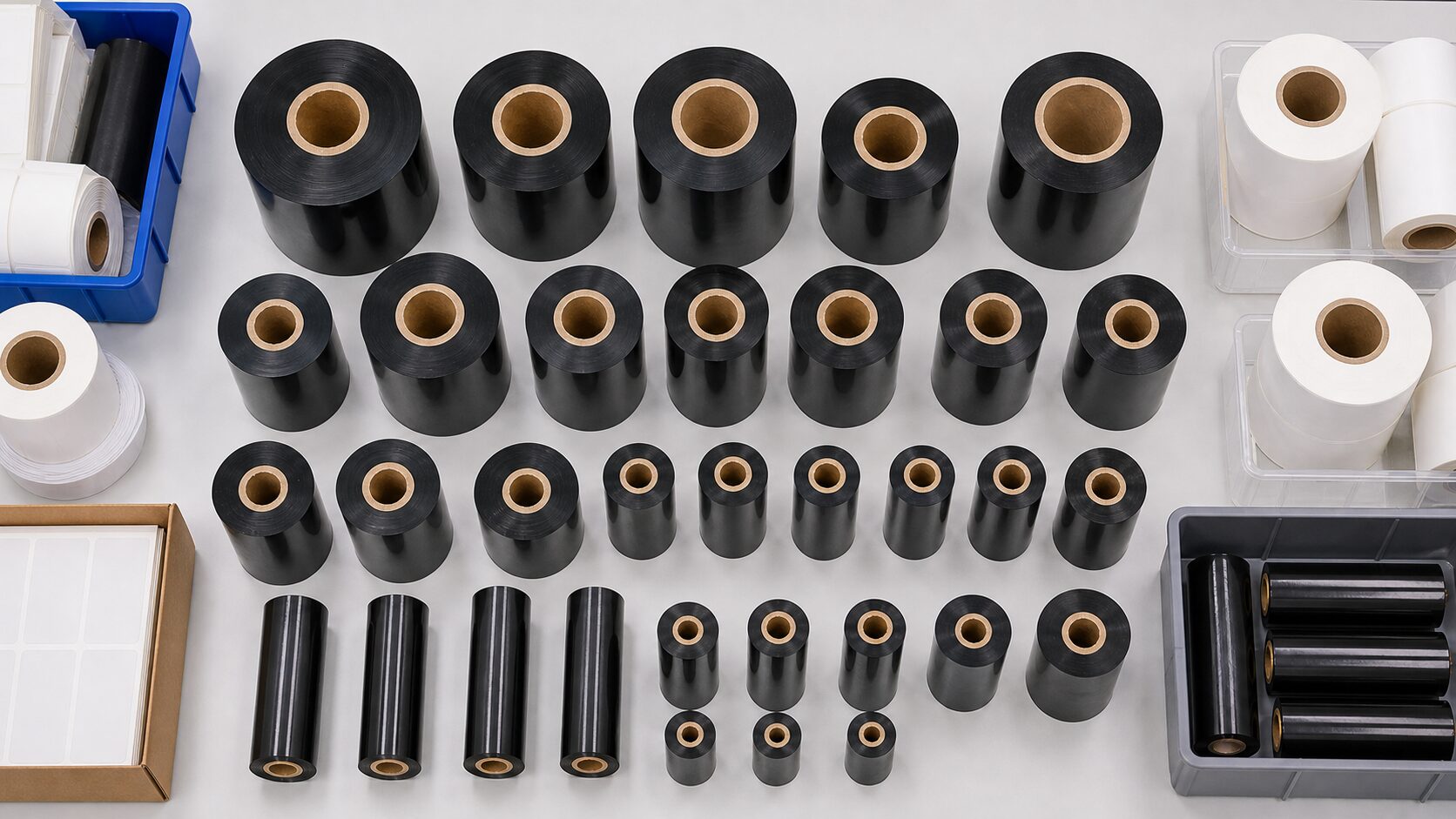
Material choice must match direct thermal or thermal transfer printing

Direct thermal
No ribbon, but the media is heat-sensitive
The printhead creates the image in a heat-reactive coating. This can simplify consumables for selected short-life work, but heat, sunlight, moisture, plasticisers, abrasion and chemicals can shorten readability. Confirm the exact grade and required life.

Thermal transfer
The ribbon and label surface must be tested together
Wax is commonly used with paper, wax-resin can raise resistance for selected paper and synthetic materials, and resin is often evaluated for demanding synthetics. These are starting directions, not universal substitutions.
Workflow and Environment Fit
Different Hong Kong workflows create different label risks
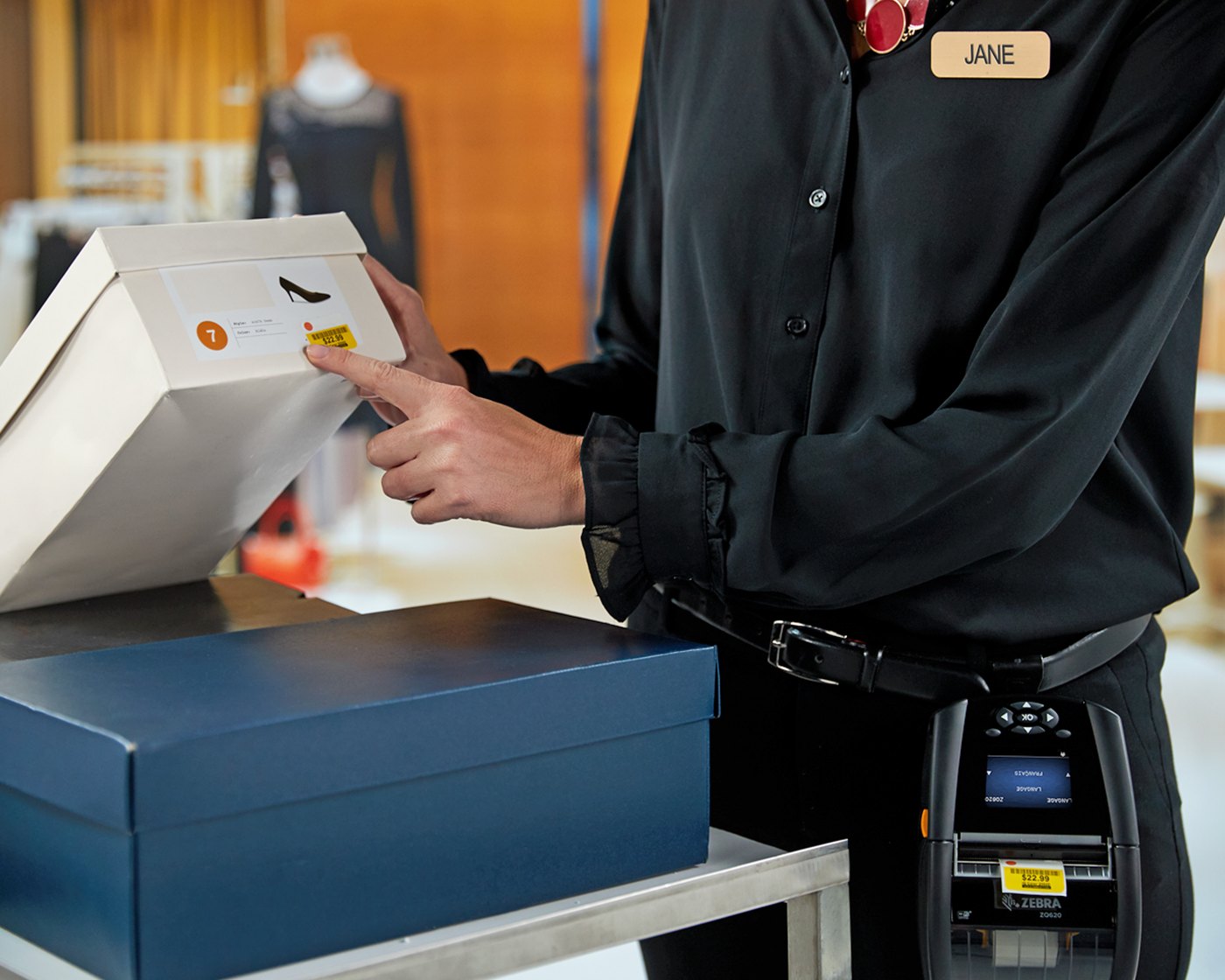
Humidity, condensation, cold-chain hand-offs, cleaning, abrasion and semi-outdoor work should be defined as real test conditions. The photographs below illustrate the workflow only; they do not prove a material rating.

Laboratory and small-container labels
Provide the actual tube or container diameter, application temperature, storage cycle, named cleaners and scan process. Do not assume a generic synthetic label is suitable for chemicals, low temperature or regulated use.

Cold-chain and refrigerated logistics
State whether the label is applied before cooling, onto a cold dry surface or onto a damp surface. Application temperature, condensation and later service temperature are separate questions.

Field assets and equipment
Confirm sunlight, rain, surface material, cleaning, abrasion and expected life. Request documented performance for the exact construction and test the printed barcode after exposure.
Common Selection Mistakes
Five shortcuts that often lead to the wrong label
Using “synthetic” as a complete specification
Ask for the exact PP, PET or other face material, topcoat, adhesive, liner and print method. Different synthetics behave differently.
Assuming water-resistant means outdoor-ready
The face may resist water while the print fades or the adhesive lifts. UV, rain, heat, humidity and service life need separate evidence.
Treating silver colour as a performance grade
Silver polyester may give a metallic finish, but it does not automatically provide metal-foil, tamper-evident, chemical or compliance performance.
Testing adhesion on the wrong surface
Clean flat glass cannot represent a rough carton, powder-coated metal, low-surface-energy plastic or a small curved vial.
Judging barcode quality by appearance
Scan with the deployed reader before and after exposure. Where a customer or GS1 process requires formal evidence, use the applicable ISO/IEC verification method.
Sample Test Plan
How to test label material before a production order
Document the real application
Record the object, surface, curve, contaminants, application temperature, exposure, required life and removal behaviour.
Request complete constructions
Sample the named facestock, topcoat, adhesive and liner, plus the intended ribbon where thermal transfer is used.
Print representative live data
Use the production printer, expected speed and darkness, and the smallest or densest barcode likely to be printed.
Apply to real items
Use the normal cleaning and application process, consistent pressure and the intended application temperature. Allow the specified dwell time.
Expose and inspect
Run only the relevant moisture, cold, heat, abrasion, cleaning, chemical or outdoor exposure; check edge lift, smear, fade and residue.
Scan again and run a pilot
Recheck the barcode with the real reader, then run a small batch across representative printers, operators and surfaces before approval.
Before You Enquire
Information that helps narrow the label direction
| Information | What to provide | Why it matters |
|---|---|---|
| Object and surface | Real sample or photo; carton, glass, metal, painted surface, plastic type, film, tube or other substrate. | Adhesive wet-out, curve and surface energy change the result. |
| Environment and life | Indoor, outdoor, chilled, frozen, damp or hot; expected readable life; abrasion and named cleaners or chemicals. | Material and print durability must match the actual exposure. |
| Adhesive behaviour | Permanent, removable, repositionable, destructible or tamper-evident requirement. | These are separate adhesive outcomes and should not be assumed from the face material. |
| Printer and media | Printer make and model, DPI, label size, core, roll direction, sensing method and current ribbon. | Confirms mechanical fit and a realistic print-and-ribbon test. |
| Barcode and scanner | Barcode type, smallest label, data length, scanner model, reading distance and lighting. | Readable print must still work in the deployed scanning workflow. |



FAQ
Common questions about label materials
Is PP or PET always better than paper?
No. Paper may be the suitable and economical choice for short-life indoor work. PP or PET becomes worth evaluating when moisture, tearing, chemicals, temperature, abrasion or longer retention justifies the extra construction requirements.
Does a synthetic label mean it is waterproof?
Not automatically. The face may resist water while the printed image or adhesive does not. Confirm the exact facestock, topcoat, adhesive, ribbon and exposure test.
What is silver polyester?
It is commonly a PET-based label face with a metallic visual finish. The term does not by itself confirm adhesive strength, tamper evidence, chemical resistance, outdoor life or compliance.
Can one label work on cartons, glass, metal and plastic?
Sometimes, but it should not be assumed. Surface energy, coating, texture, contamination and curvature can change adhesion, so each important surface should be sampled.
Do direct thermal labels need ribbon?
No. Direct thermal media forms the image through a heat-reactive coating. Thermal-transfer printing uses a ribbon and normally provides more material and durability options when correctly matched.
What should we send Easy Scan for a label-material review?
Send the printer model, current label and ribbon details, label size, a real item or clear surface photo, required life, temperature, moisture, cleaning and abrasion conditions, plus the barcode and scanner used.
Discuss Your Label Application
Bring the surface, environment, printer and barcode into one selection review
Easy Scan can help Hong Kong businesses organise label-material, adhesive, ribbon and printer questions, then narrow suitable sample directions for the real workflow. Final suitability should be confirmed with the exact construction and sample testing.