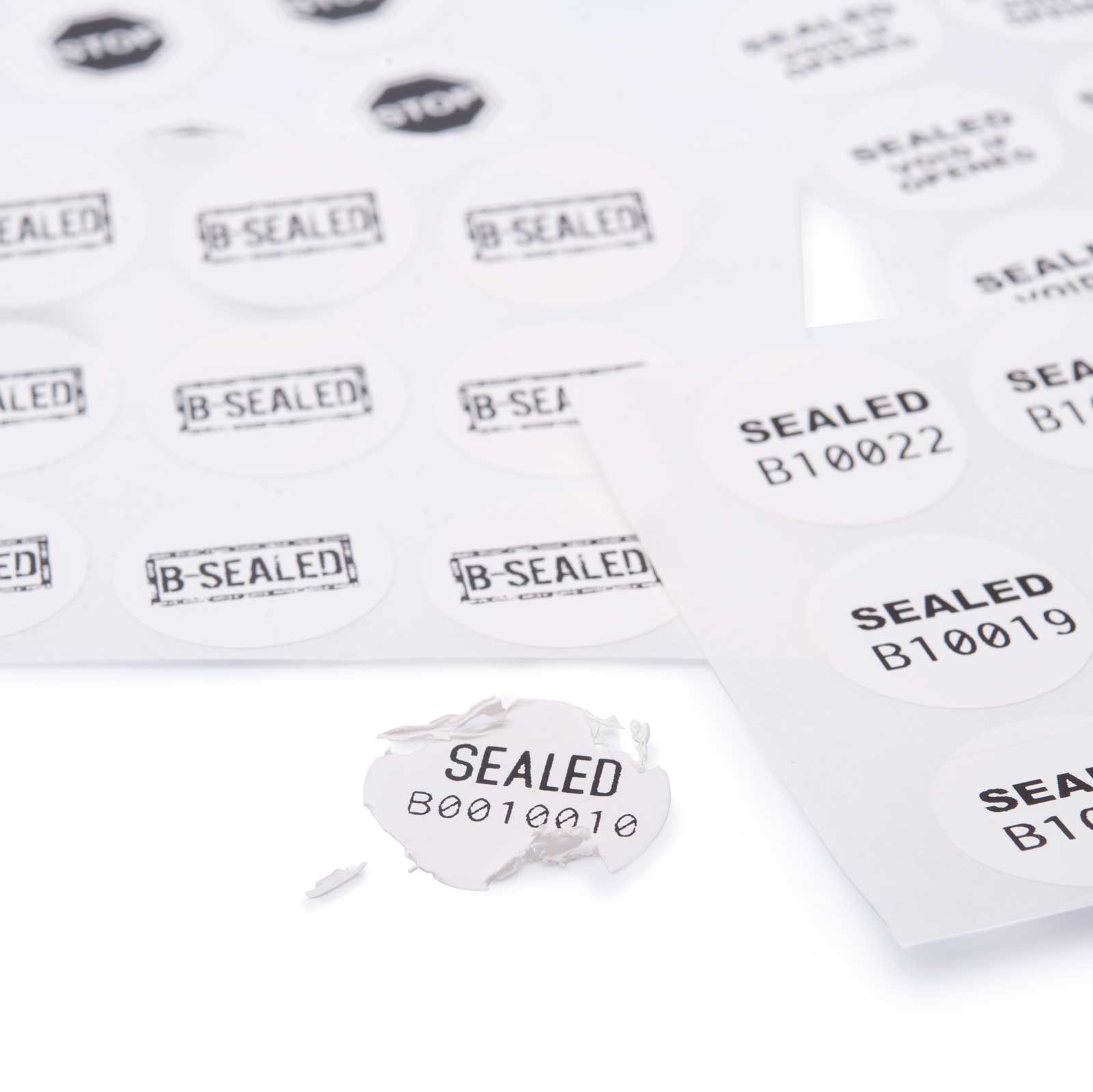
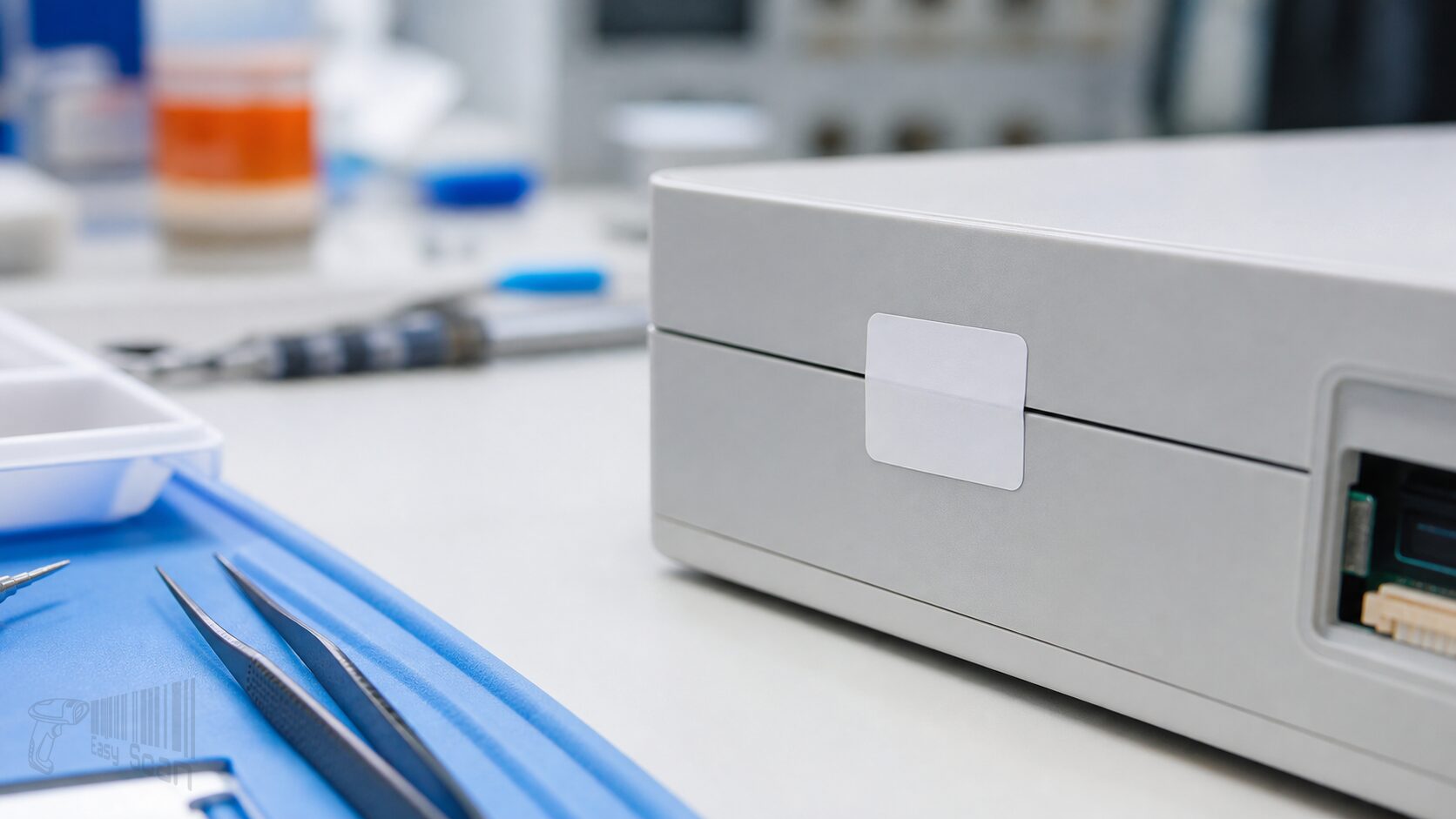
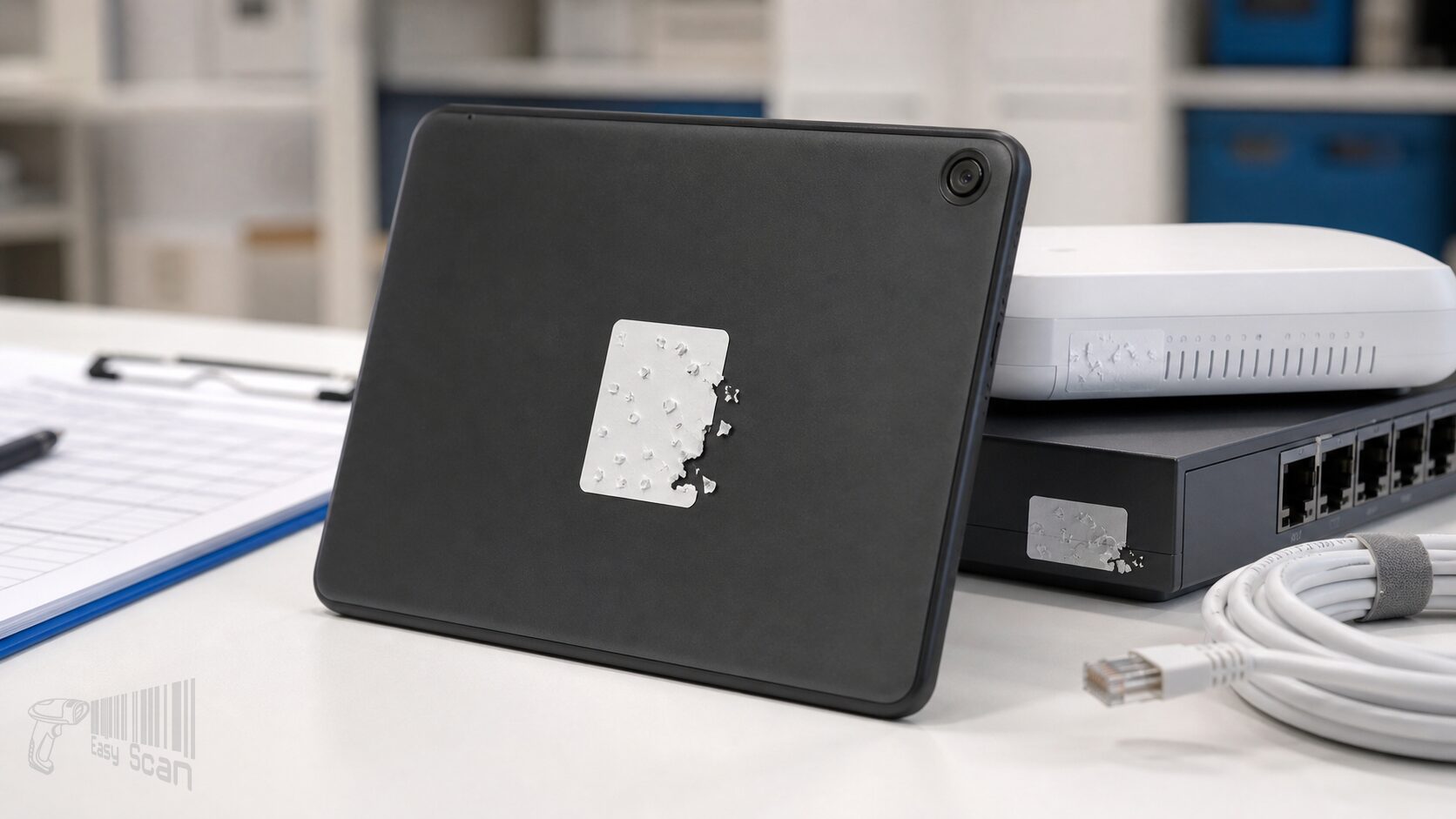
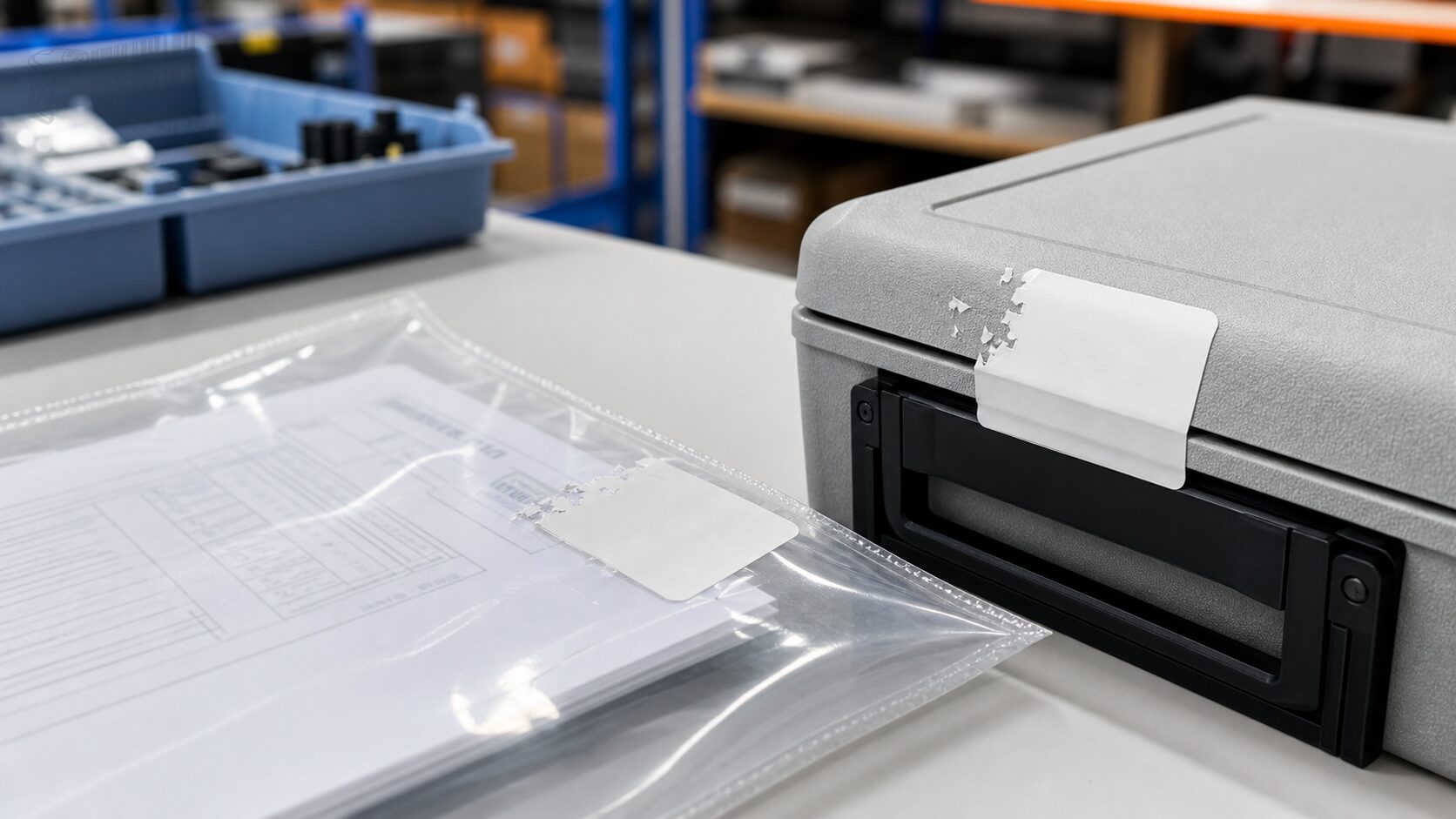
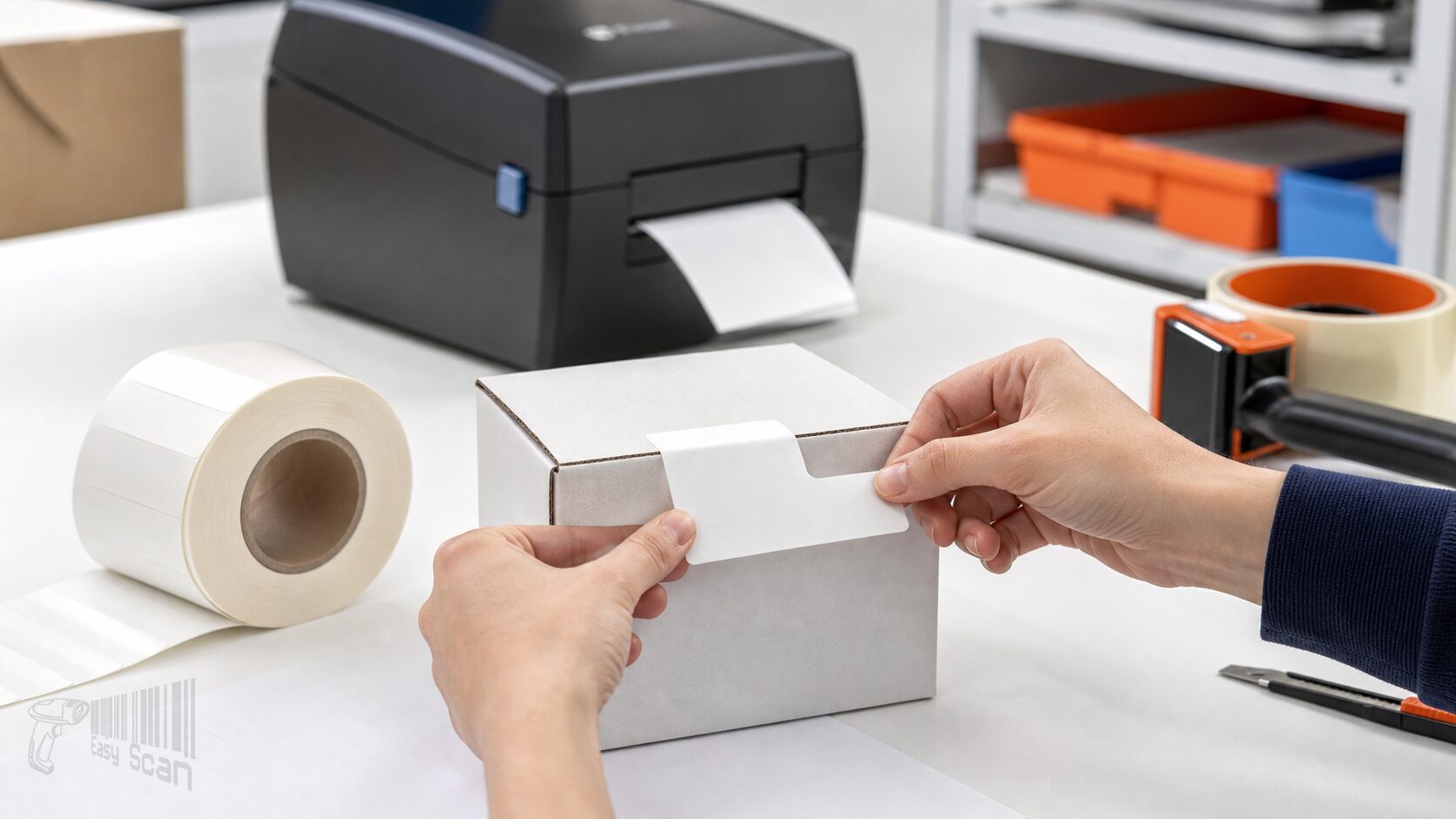
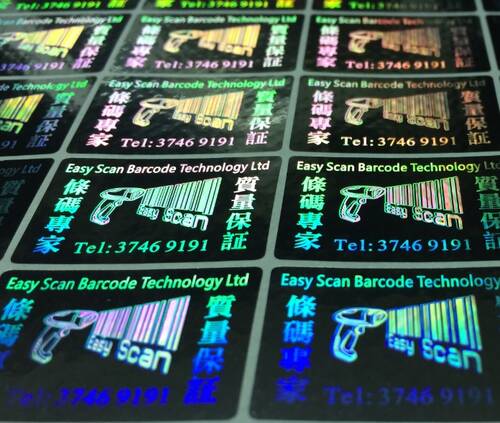
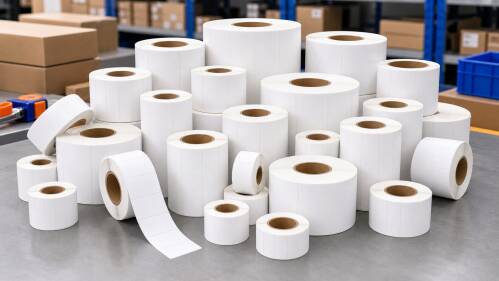
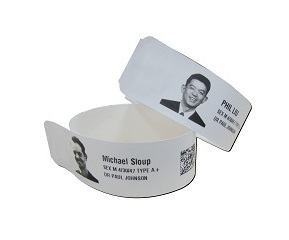
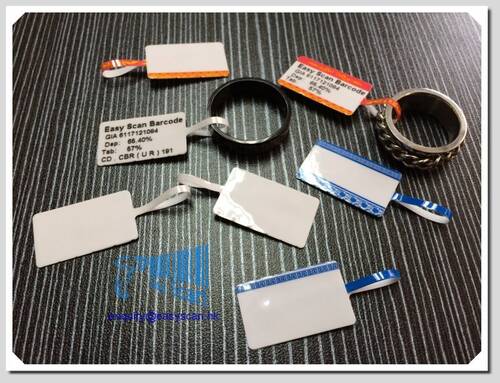
Destructible paper labels are used for tamper-evident sealing, warranty control, asset identification and one-time security labelling. Once applied, the label is designed to break or show visible damage if someone tries to remove it.
- Suitable for warranty seals, anti-transfer labels, electronics, documents and equipment cases.
- Can be assessed by size, surface, adhesive, print content, quantity and operating environment.
- Sample testing is recommended before rollout, especially on plastic, metal, painted or curved surfaces.
Tamper-Evident Security Label
Destructible Paper Labels for Warranty Seals, Assets and Anti-Transfer Use
Destructible paper labels are one-time security labels. After application, an attempted removal breaks the face material or leaves clear damage, helping service, warehouse, retail and electronics teams identify opened, transferred or tampered items.
Quick Fit
Is a destructible label the right security label for this job?
One-time tamper evidence
Useful for warranty seals, electronics, asset labels, document seals, service handover and applications where a label should not be removed intact and reused.
Surface and print method
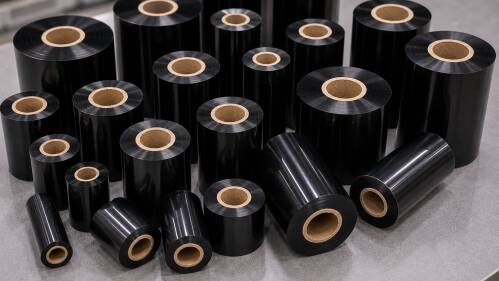
Label size, surface material, adhesive, environment, barcode density, printer model and ribbon compatibility can all affect the final result.
Reusable or long outdoor labels
If labels need to be removed frequently, reused or exposed outdoors for long periods, compare VOID labels, synthetic labels or other material options first.
Product Role
Not a standard paper label, but a way to leave visible tamper evidence
A normal paper label mainly displays information. A destructible label is selected because it should not be removed intact. When someone tries to peel it away, the face material breaks, making unauthorised opening, swapping or transfer easier to detect.
For Hong Kong businesses, this can support warranty control, electronics handling, asset management, retail products, document pouches, equipment cases and warehouse workflows. Text, serial numbers, barcodes or QR codes can be assessed, but print quality depends on the final material, size and printing setup.
Procurement Focus
The surface matters as much as the label size
The result depends on the face material, adhesive and target surface. Plastic, metal, painted surfaces, rough surfaces, low-surface-energy materials and curved surfaces may require different material choices or sample testing.
Easy Scan can help organise the required size, material, print content, quantity, printer and ribbon compatibility, reducing the risk of poor adhesion, weak tamper evidence, unreadable barcodes or unsuitable bulk production.


Key Points
Six practical questions a tamper-evident label should answer
Difficult to remove intact
The label is selected to break or show visible damage when removal is attempted, reducing the chance of clean transfer and reuse.
Useful for warranty control
Common uses include warranty seals, service seals, equipment casing seams, package seals and workflows where opening status matters.
Can support variable information
Text, serial numbers, barcodes, QR codes, dates and batch information can be assessed when the material, print method and size are suitable.
Surface testing is important
Plastic, metal, painted, rough and curved surfaces can produce different adhesion and breakage results, so sample testing is recommended.
Environment changes material choice
Indoor, outdoor, heat, cold, oil, cleaning chemicals and abrasion requirements should be confirmed before choosing the final label material.
Printer fit must be checked
If the label will be printed in-house, confirm roll format, sensing, label size, printer model and ribbon compatibility before rollout.
Applications
Common Hong Kong B2B use cases
Electronics and accessories
Used on packaging seals, device casing seams, warranty stickers or anti-transfer labels to help detect opening or swapping.
Repair and after-sales service
Applied to device casings, screw areas, warranty positions or handover documents so frontline teams can judge service status more clearly.
IT assets and company equipment
Can work with asset numbers, barcodes or QR codes when the label size, surface and print quality are suitable.
Retail and authenticity control
Supports high-value products, accessories, gift packaging and warranty seals where after-sales traceability matters.
Document pouches and cases
Useful where teams need a visible sign that a pouch, toolbox, storage case, warehouse item or handover pack has been opened.
Warehouse and internal control
Can support batch, sample, hold, inspected or retained-item workflows where movement or opening status should be visible.

Selection Guide
Prepare these four details before enquiry
Use case
Warranty seal, authenticity, asset ID, document seal or warehouse control. The use case affects material and artwork decisions.
Target surface
Share photos or describe whether the label will be applied to paper, plastic, metal, painted surfaces, glass, curved or rough surfaces.
Print content
Confirm whether the label needs a logo, serial number, barcode, QR code, date, batch code or multiple artwork versions.
Environment
Confirm indoor or outdoor use, temperature, humidity, abrasion, cleaning chemicals, oil exposure and expected service life.

Comparison
Destructible paper label, VOID label or standard label?
| Label Type | Main Role | Best Fit | Procurement Reminder |
|---|---|---|---|
| Destructible paper label | Breaks when removal is attempted, leaving visible tamper evidence. | Warranty seals, anti-transfer labels, electronics, assets and device seals. | Test the actual surface and breakage effect before rollout. |
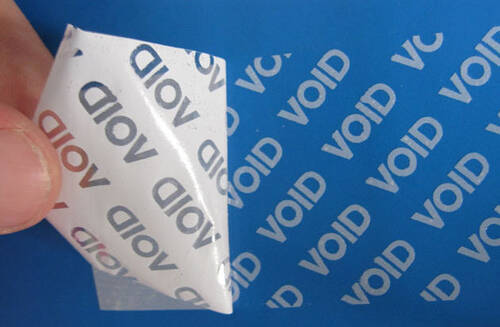
| VOID label | Leaves VOID or another residual pattern after removal. | Packaging, equipment sealing, asset management and logistics seals. | Confirm residue effect, adhesive and surface compatibility. |
| Standard paper label | Displays product, price, barcode or logistics information. | General marking where tamper evidence is not required. | Do not treat it as a tamper-evident security label. |
| Synthetic label | Improves water, abrasion or durability performance. | Warehouses, outdoor use, humid areas or high-contact environments. | Tamper evidence depends on the material and design, so confirm first. |
If the best label type is not clear, share the use case, surface photo and expected print content. Easy Scan can help compare destructible, VOID and other label options.
Procurement Data
Details to confirm before ordering destructible paper labels
| Product type | Destructible paper label / destructible security label / tamper-evident label. |
|---|---|
| Main function | Designed not to be removed intact; attempted removal should break the label or leave visible damage. |
| Common uses | Warranty seals, authenticity labels, asset labels, electronics, documents and equipment seals. |
| Print content | Text, serial numbers, barcodes, QR codes, batch codes, dates or company information can be assessed by project. |
| Target surface | Use the actual item for testing, especially plastic, low-surface-energy, curved, rough, metal or painted surfaces. |
| Environment | Indoor use is common. Outdoor, heat, cold, oil, chemical or abrasion exposure should be assessed separately. |
| Printer setup | If printed in-house, confirm label size, roll core, sensing method, printer model and ribbon compatibility. |
| Quotation data | Provide size, quantity, use case, surface, print content, environment and whether sample testing is required. |
Common Mistakes
Issues to avoid before production
Choosing only by price
The value of a destructible label is its tamper-evident behaviour. If the material and surface do not match, a cheap label may fail in use.
Skipping real-surface testing
The same label can behave differently on paper boxes, plastic, metal and painted surfaces. Test before bulk production.
Ignoring barcode size
Small labels or dense layouts can affect barcode and QR-code readability. Test print quality and scanning distance first.
Treating all security labels as the same
Destructible, VOID, synthetic and high-tack labels work differently. Choose based on whether the goal is breakage, residue or durability.
Easy Scan Support
Review the label, printer and scanning workflow together
Label and print workflow fit
Easy Scan can help review label material, ribbons, barcode printers and scanners so the label choice matches the real workflow.
Hong Kong B2B procurement support
When procurement, warehouse, IT, service and retail teams are involved, Easy Scan can help turn the requirement into clearer buying criteria.
Reduce rework
Checking the surface, environment and print content early can reduce poor adhesion, weak tamper evidence and readability issues later.
Compare related label types
If destructible paper is not the best fit, compare VOID labels or other label and ribbon options.
FAQ
Destructible paper label FAQ
What is the difference between a destructible label and a VOID label?
A destructible label mainly leaves evidence by breaking apart. A VOID label usually leaves a VOID or residual pattern after removal. Both can support tamper evidence, but the result, surface fit and cost can differ.
Can destructible paper labels include barcodes or QR codes?
They can be assessed by project. Label size, material, printer, ribbon, barcode density and scanning distance all affect readability.
Will it work on plastic or metal surfaces?
Not automatically. Plastic, metal, painted, rough and curved surfaces can affect adhesive and breakage performance. Use the actual item for testing.
What information should I provide for enquiry?
Share the label size, use case, quantity, target surface, print content, operating environment, barcode or serial-number needs, and any existing printer model.
Enquire About Destructible Paper Labels
Prepare the surface photo, size and use case before quotation
If you are choosing labels for warranty seals, anti-transfer use, asset identification or equipment cases, send Easy Scan the target surface and expected print content so we can help assess the right direction.
| Brand | Easy Scan |
|---|---|
| Product Type | Tamper-evident label |
| Label Type | Destructible paper label |
| Suitable Application | Warranty seals, asset identification, electronics, documents and equipment-case sealing |
| Enquiry Factors | Size, target surface, adhesive, print content, quantity and operating environment |
FAQ
Can a destructible paper label be removed intact?
It is selected because it should not be removed intact in normal use. Attempted removal should break the face material or leave visible damage, making tampering or transfer easier to detect.
Is it suitable for every surface?
No. Plastic, metal, painted, rough, curved and low-surface-energy surfaces can affect adhesion and breakage performance. Test with the real item before bulk production.
Can the label be customised with size or print content?
It can be assessed by project. Common content includes company information, serial numbers, barcodes, QR codes, dates, batches and warning messages. Final feasibility depends on size, quantity, artwork and print method.
Can it be printed with a barcode printer?
It depends on the label material, roll format, sensing method, printer model and ribbon compatibility. If you plan to print in-house, provide the printer model and target label size.
Can it be used outdoors or in wet areas?
That needs separate assessment. Destructible paper labels are commonly used indoors. Outdoor, wet, high-temperature, cold, oily or chemical environments may require another material.
How do I choose between destructible and VOID labels?
Use destructible labels when the visible label itself should break. Consider VOID labels when the intended evidence is a residual VOID or pattern on the item surface. Surface testing should guide the final decision.
What should I send Easy Scan for enquiry?
Send the use case, surface photo, size, quantity, print content, environment, barcode or serial-number needs, and whether you already have a printer. This helps narrow the suitable label direction quickly.
Leave Your Message