
Easy Scan 掃碼科技

Barcode Printer Ribbon

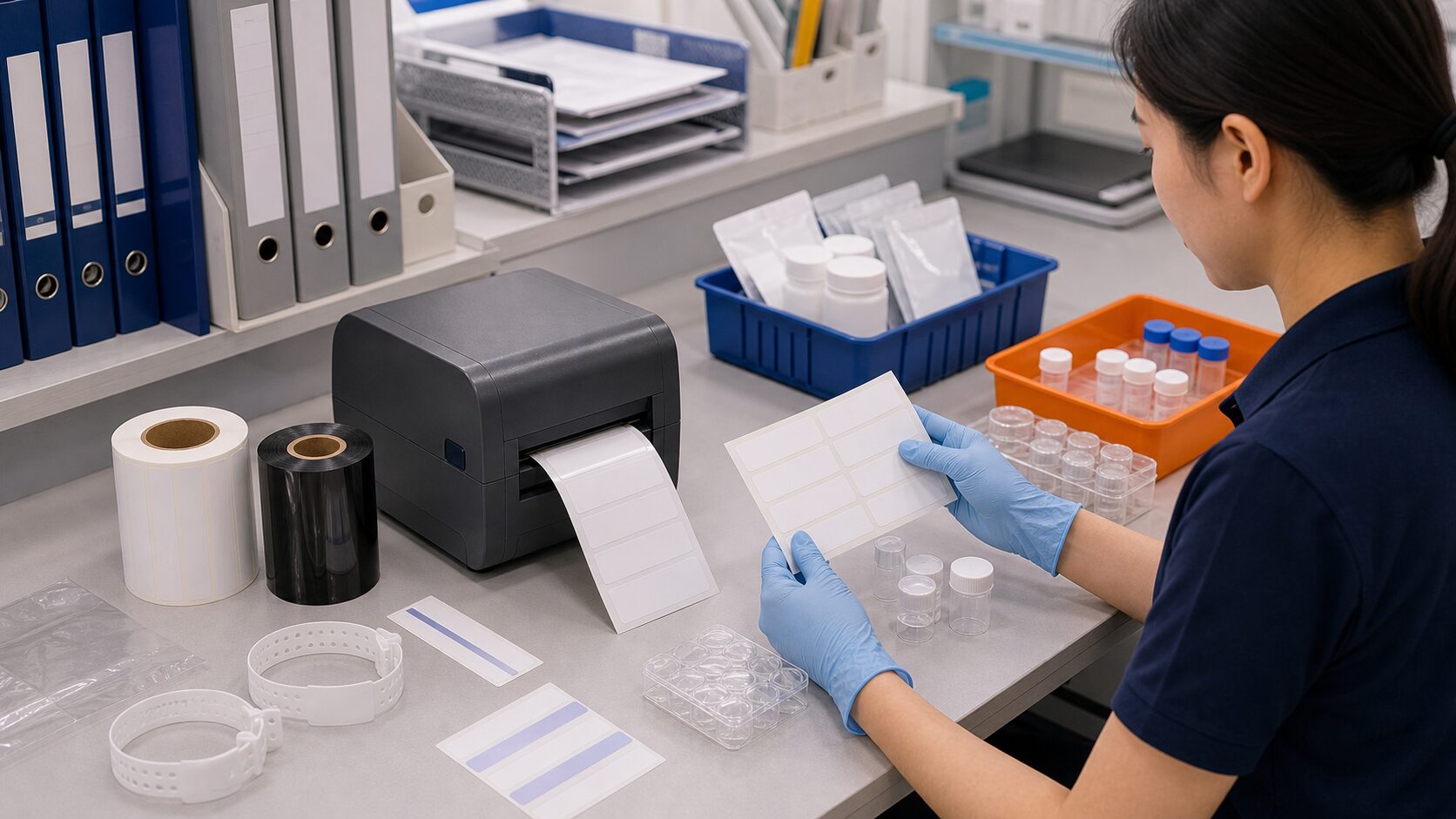
Barcode printer ribbon is used for thermal transfer printing when labels need clearer, longer-lasting or more durable print than direct thermal media can provide. Selection should confirm label material, printer model, ribbon family, width, core, winding direction and operating environment.

  • Compare wax (蠟基), wax-resin (混合基) and resin (樹脂) ribbon directions by label material and durability need.
  • Check printer model, ribbon size, label width, print content and scan-readability requirements before ordering.
  • For enquiry, share your current printer model, label sample, ribbon sample or part number, daily usage and application environment.

Barcode Printer Ribbon

Choose the right thermal transfer ribbon for labels, printers and Hong Kong workflows

Barcode printer ribbon is not a one-size-fits-all consumable. Before ordering, confirm whether the printer uses thermal transfer, then match wax (蠟基), wax-resin (混合基) or resin (樹脂) ribbon with the label material, printer model, ribbon size, winding direction and real handling environment.

Ribbon familiesWax (蠟基), wax-resin (混合基) and resin (樹脂) for different label materials and durability needs
Fit checksPrinter model, width, length, core, winding direction, label stock and print settings
Enquiry inputPrinter photo, label sample, current ribbon sample, monthly volume and application environment

Product Visuals

Compare ribbon families before selecting a roll size

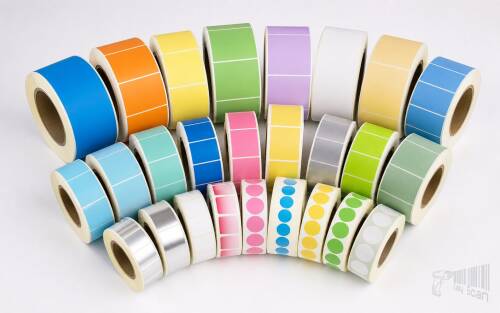
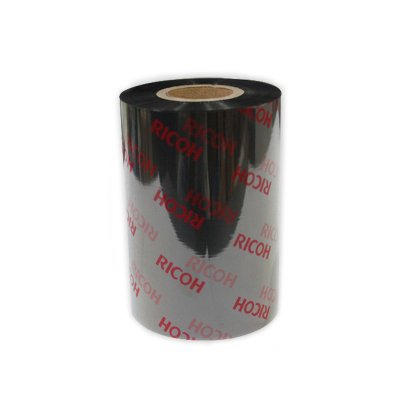
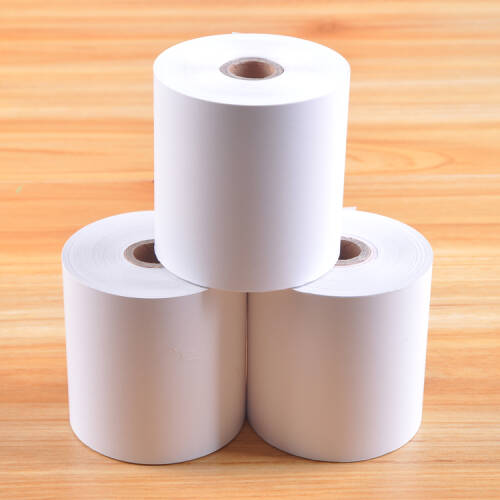
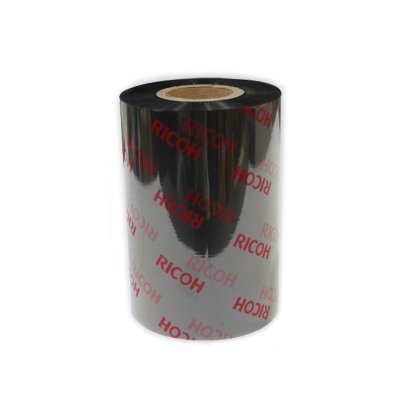
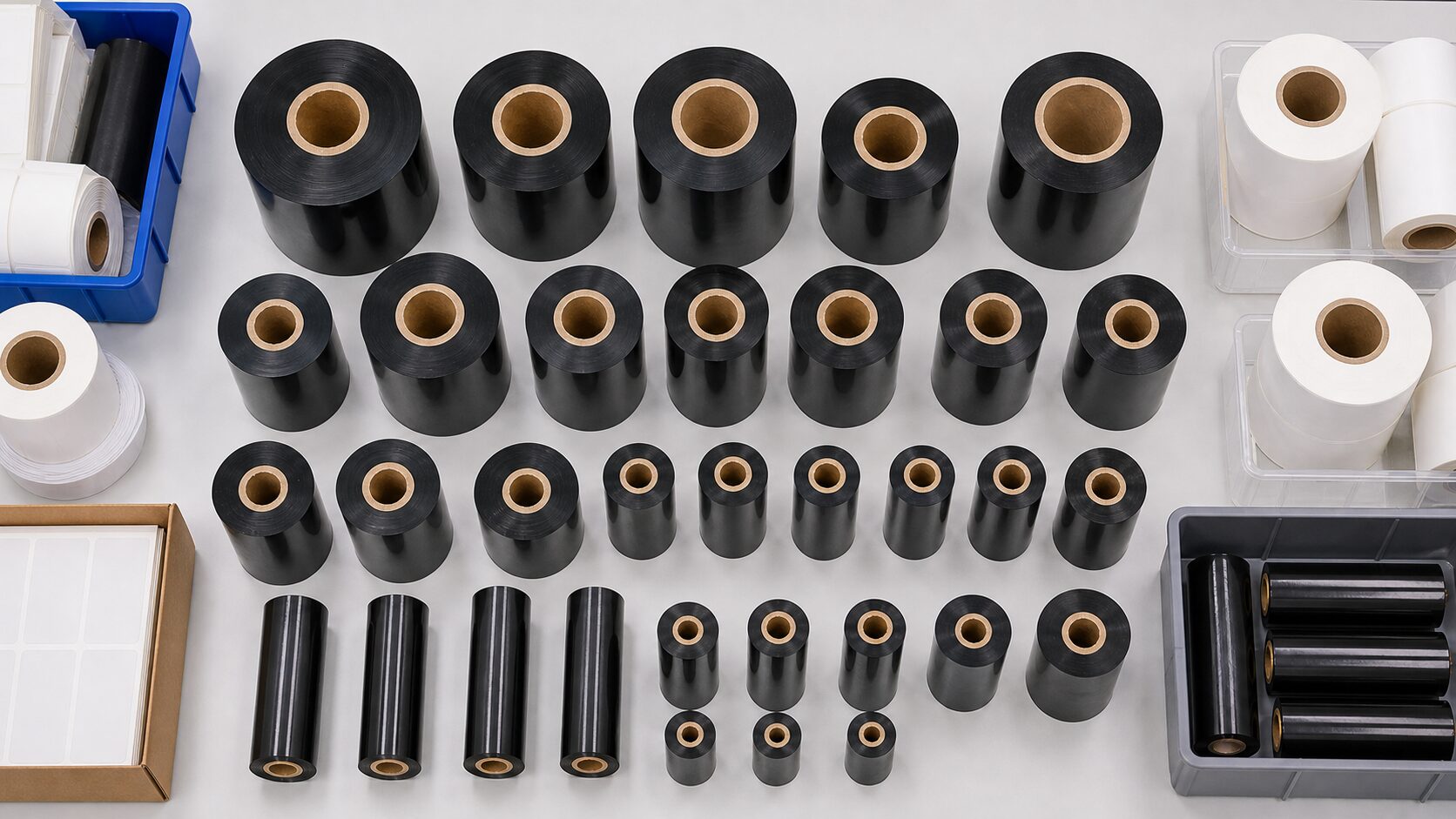
The same printer may need a different ribbon direction when the label material, barcode density or operating environment changes. Use the images below as representative ribbon examples, not as a universal stock or compatibility promise.

Wax (蠟基) ribbonOften reviewed for general paper labels where strong abrasion or chemical resistance is not the main requirement.
Wax-resin (混合基) ribbonA middle direction for coated paper and selected synthetic labels where stronger smear or scratch resistance is needed.
Resin (樹脂) ribbonUsually assessed for synthetic labels and harsher environments, subject to the exact label and application.

Product Overview

Ribbon selection starts with print method, label stock and printer fit

Thermal transfer ribbon is a coated film used by a thermal transfer barcode printer to transfer the printed image onto a label. It is different from direct thermal printing, where the media itself reacts to heat and no ribbon is used. For Hong Kong businesses, the first decision is therefore simple: confirm whether the current printer and label workflow actually need ribbon.

Once thermal transfer is confirmed, ribbon choice should be matched to the label material and the operating environment. Paper labels commonly start with wax (蠟基) or wax-resin (混合基) review. Coated paper, matte synthetic labels and higher-handling workflows may need wax-resin (混合基). Synthetic labels, stronger abrasion, chemical contact or temperature exposure may require resin (樹脂), but only after checking the exact label-and-ribbon combination.

Quick Fit

Is ribbon the right consumable for this label job?

Thermal transfer label, ribbon and scanning workflow

Good fit

You use a thermal transfer printer and need labels for product, warehouse, carton, inventory, asset, manufacturing or longer-life identification workflows.

Testing ribbon and label samples before ordering

Test first

The label will face rubbing, humidity, cold handling, curved surfaces, synthetic stock, dense barcodes, small text or longer retention requirements.

Checking whether a direct thermal workflow does not need ribbon

May need another route

If the workflow is direct thermal, no ribbon is used. If the printer model, ribbon winding or label material is unknown, confirm those details first.

Suitable / Needs Confirmation

Where thermal transfer ribbon fits best

Suitable thermal transfer label and ribbon workflow

Suitable

  • Thermal transfer barcode printers used for product, carton, warehouse, logistics, inventory or asset labels.
  • Labels that need clearer print, stronger handling resistance or longer readable life than basic direct thermal labels.
  • Replacement ribbon enquiries where the existing printer model, label size or current ribbon sample can be provided.
Special label materials and applications need confirmation

Needs confirmation

  • Direct thermal workflows, because they do not use ribbon.
  • Food-contact, healthcare, chemical, freezer, outdoor, electronics or regulated applications that need exact material proof.
  • Unclear printer model, ribbon width, roll length, core size, coating side, winding direction or printhead type.

Key Checks

Eight checks before choosing barcode printer ribbon

Confirming print method

Print method

Confirm the printer is running thermal transfer. Direct thermal labels do not use ribbon.

Comparing label materials

Label material

Separate uncoated paper, coated paper, PP, PE, PET, polyimide, wristband, card stock and other synthetic or special materials.

Comparing wax, wax-resin and resin ribbon

Ribbon family

Review wax (蠟基), wax-resin (混合基) or resin (樹脂) based on label stock, durability requirement and operating environment.

Checking printer model and ribbon fit

Printer model

The model determines supported ribbon width, roll length, core size, winding direction and print path.

Checking ribbon width

Ribbon width

Ribbon should normally be at least as wide as the media so the printhead is protected from label-edge wear.

Testing barcode density and scan readability

Barcode density

Small text, dense 2D codes, rotated barcodes and faster print speeds may need more careful ribbon, label and printer-setting review.

Reviewing the real operating environment

Real environment

Humidity, rubbing, cold handling, outdoor exposure, oil, cleaning chemicals and storage life can change the correct ribbon direction.

Sample testing before larger orders

Sample test

Before larger orders, test the actual label, ribbon, printer settings and scanner where the application is demanding or new.

Applications

Common ribbon use cases in Hong Kong businesses

Warehouse and logistics label use case

Warehouse and logistics

Carton labels, bin labels, shipping labels, pallet labels and returns labels need stable print contrast and scan reliability.

Retail and product label use case

Retail and product operations

Product labels, price labels, shelf labels, hang tags and back-office labels may use different ribbon directions depending on label life and handling.

Manufacturing and asset tracking label use case

Manufacturing and asset tracking

Batch labels, WIP labels, serial labels, equipment tags and fixed-asset labels often need stronger material and ribbon matching.

Healthcare, office and special label workflow

Healthcare, office and special workflows

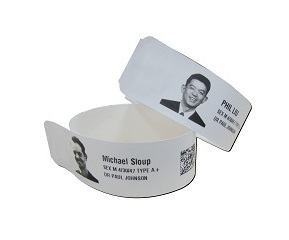
File labels, wristband-related workflows, laboratory labels, service records and special-material labels should be reviewed by application requirement.

Consumables Fit

Ribbon should be matched with labels, printers, scanners and software

Fit item Why it matters Useful details to provide
Label material Ribbon formulation must match paper, coated paper or synthetic face stock. Label sample, material name, application surface and expected label life.
Barcode printer Determines supported ribbon width, roll length, core size, winding direction and thermal transfer capability. Brand, model, printer photo and current ribbon path where possible.
Barcode scanner / mobile computer Print contrast and barcode size affect real scan performance. Scanner model, scan distance, lighting, failed samples and barcode content.
Label software / system ERP, WMS, POS or label software affects label size, template, darkness and print speed needs. Software used, label template, barcode type and output workflow.

For broader consumable planning, compare the parent Label & Ribbon category and the Printing Supplies page.

Selection Guide

Ribbon selection workflow

Step one: confirm print method
1

Confirm print method

Check whether the printer and label job use thermal transfer or direct thermal media.

Step two: check printer model
2

Check printer model

Confirm brand, model, print width, ribbon core, roll length and winding direction.

Step three: match label material
3

Match label material

Review whether the label is paper, coated paper, PP, PE, PET or another synthetic material.

Step four: select ribbon direction
4

Select ribbon direction

Shortlist wax (蠟基), wax-resin (混合基) or resin (樹脂) based on durability, environment and print-quality needs.

Step five: test print and scan
5

Test print and scan

Check smudge, scratch, barcode contrast, scanner readability, speed and darkness settings.

Step six: plan repeat ordering
6

Plan reordering

Record the chosen ribbon size, label material, printer model and support notes for repeat orders.

Comparison

Wax (蠟基) vs wax-resin (混合基) vs resin (樹脂) ribbon

This table is for initial selection only. Final suitability depends on the exact printer, label material, application environment and test result.

Ribbon direction Common label fit Typical use direction Selection risk
Wax (蠟基) General paper labels. Cost-sensitive carton, shelf, inventory or indoor product labels where heavy abrasion is not expected. May not be enough for synthetic labels, rubbing, moisture, oil or longer-life requirements.
Wax-resin (混合基) Coated paper and selected synthetic labels. Better smear and scratch resistance for labels that face more handling or moderate durability needs. Still needs material testing for harsher chemical, heat or outdoor environments.
Resin (樹脂) Many synthetic materials such as PET, PP or other durable stocks. Higher durability direction for abrasion, chemicals, temperature exposure or longer-life identification. Not automatically suitable for every paper label or every compliance need; test the exact media-ribbon pair.

Common Mistakes

Common reasons ribbon selection fails

Avoid confusing direct thermal and thermal transfer workflows

Assuming every printer needs ribbon

Direct thermal workflows do not use ribbon. Confirm the print method first.

Avoid choosing ribbon only by price

Choosing only by price

A lower-cost ribbon can become expensive if labels smear, scan poorly or need reprinting.

Avoid ignoring ribbon width and winding

Ignoring width and winding

Wrong width, core, roll length or coating side can cause fit problems, wrinkles or poor print quality.

Avoid skipping sample checks

Skipping sample checks

Durability depends on the ribbon, label, printer settings and actual use environment together.

Why Easy Scan

Why ask Easy Scan about barcode printer ribbon?

Easy Scan works with Hong Kong B2B barcode printing, label and ribbon matching, scanner readability, printer setup and recurring consumable replenishment. Based on your current printer model, label sample, application surface and expected usage, we can help narrow the suitable ribbon direction and identify when printer setting or label material may be part of the issue.

This page does not publish fixed stock, price, lead time or universal compatibility promises. Actual quotation and supply direction should be confirmed by ribbon size, label material, quantity and use case.

Specifications

Ribbon enquiry specification checklist

Use this checklist to prepare a ribbon enquiry. It records what must be confirmed; it does not mean every size, material or option is always available.

Basic details
Product category Barcode printer ribbon / thermal transfer ribbon / labelling consumables.
Print method Thermal transfer only; direct thermal workflows do not use ribbon.
Ribbon family Wax (蠟基), wax-resin (混合基) or resin (樹脂), subject to label material and durability requirement.
Printer and ribbon fit
Printer model Brand and model should be confirmed before recommending width, length, core or winding direction.
Ribbon size Width, roll length, core size, outer diameter and coating side should match the printer and label width.
Label material Paper, coated paper, PP, PE, PET, polyimide, wristband, tag or other material should be identified.
Workflow fit
Print content Barcode type, QR code, small text, Chinese text, logo, print speed and darkness setting may affect ribbon choice.
Environment Humidity, rubbing, cold handling, oil, chemical exposure, outdoor use and label retention period should be reviewed.
Items to confirm Price, stock, lead time, MOQ, exact size, exact material and special durability requirements should be confirmed separately.

FAQ

Barcode printer ribbon FAQ

Does every barcode printer need ribbon?

No. Only thermal transfer printing uses ribbon. Direct thermal printers or direct thermal label workflows do not use ribbon, so print method should be confirmed first.

How do I choose between wax (蠟基), wax-resin (混合基) and resin (樹脂) ribbon?

Start with label material and durability. General paper labels often start with wax (蠟基) review, coated paper and selected synthetic labels may need wax-resin (混合基), and harsher synthetic or chemical / abrasion environments may require resin (樹脂) after testing.

Why can printed labels smudge, fade or scan poorly?

The issue may come from ribbon formulation, label material, printer settings, print speed, darkness, printhead pressure, barcode size or scanner conditions. It should be checked as a combination, not only as a ribbon problem.

What should I prepare for a ribbon enquiry?

Prepare printer brand and model, current label size, current ribbon sample or part number, label material, print content, daily or monthly usage and the real application environment.

Next Step

Need help matching ribbon with your label printer?

Share your printer model, current label sample, ribbon sample or part number, usage volume and application environment. Easy Scan can help review the suitable ribbon direction and related label / printer fit.

FAQ

Does every barcode printer use ribbon?

No. Thermal transfer printing uses ribbon, while direct thermal printing does not. If the current label is direct thermal, ribbon is not the correct consumable.

What is the difference between wax (蠟基), wax-resin (混合基) and resin (樹脂) ribbon?

Wax (蠟基) is commonly reviewed for paper labels, wax-resin (混合基) for stronger handling on coated paper and selected synthetic labels, and resin (樹脂) for higher durability on suitable synthetic labels. Final choice still depends on the exact media and environment.

Can one ribbon work with all label materials?

No. Ribbon must be matched with the label face stock, coating, adhesive use case, printer model and print settings. A ribbon that works on one label may fail on another.

Why does ribbon width matter?

Ribbon should normally be at least as wide as the media so the printhead is protected. A narrow ribbon can expose the printhead to label-edge wear and may cause poor results.

Why does the printer model matter?

The printer model determines supported ribbon width, roll length, core size, winding direction, print path and thermal transfer support. Provide the exact model before ordering.

Why do printed labels smudge or scratch off?

Smudging can come from a ribbon-label mismatch, unsuitable material, print speed, darkness, printhead pressure or handling environment. The label and ribbon combination should be tested together.
Can Easy Scan help if I only have an old ribbon sample?

Yes, an old ribbon sample, label sample, printer photo or part number can help with the initial review. Exact supply direction still depends on confirmed size, material and availability.

What should I send for a quotation?

Send the printer brand and model, ribbon width and length if known, label size, label material, current ribbon sample or part number, monthly volume and where the label will be used.

Leave Your Message

    Go to Top