
Hong Kong retail and supply-chain readiness
How 2D Barcodes and GS1 Digital Link Affect Retail and Supply Chains
Sunrise 2027 is a target for retail POS systems to read and process the GTIN from existing linear barcodes and GS1-compliant 2D barcodes by the end of 2027. It is not a universal deadline to remove every 1D barcode. A scanner upgrade alone is also insufficient: POS software, ERP or WMS processing, package printing, URL ownership and exception handling all need testing.
What does the change mean for a Hong Kong business?
GS1 Digital Link expresses GS1 identifiers in a web-compatible URI. The code identifies the product; the brand or data owner then controls the product information, instructions, certifications or other resources reached through the web address. At retail checkout, the job is different: scanners, POS software and backend systems must process the data needed for the transaction.
Treat 2027 as a POS-readiness target, not a 1D shutdown date
A sensible transition keeps the existing linear barcode while adding a suitable GS1-compliant 2D barcode. Pilot a small group of products, suppliers and stores before approving a broad packaging change. That gives packaging, operations and IT teams time to find size, data and system problems while they are still cheap to correct.
Plan packaging, capture, host systems, data and web destinations together
Define the data and business action first, then test real packaging from scan through to the completed host transaction. A successful decode does not prove that the sale, receipt or lookup worked.
Core definitions
2D barcodes, QR Code, Data Matrix and GS1 Digital Link are different layers
The symbol, the encoded data and the web redirection each do a separate job. Confusing them can leave a buyer with hardware that decodes a symbol but cannot complete the required business transaction.

| Concept | What it is | What a buyer should check |
|---|---|---|
| Linear barcode | A one-dimensional carrier such as EAN or UPC, widely used for retail identification. | It remains part of the transition; do not assume every linear code stops working in 2027. |
| 2D barcode | A two-dimensional carrier family that includes QR Code, Data Matrix and GS1 DataMatrix. | Device support for the symbol does not prove that the host understands its data. |
| Generic QR code | A QR Code may contain an ordinary URL or text without a GS1 identifier or Digital Link syntax. | Do not call a package Digital Link-ready merely because it has a QR Code. |
| GS1 Digital Link | A URI syntax that expresses GS1 identifiers, including GTIN, in a web-compatible address. | Assign ownership for the domain, encoded data, redirects and long-term content. |
For a symbol-level comparison of EAN-13, Code 128, QR Code and Data Matrix, see the barcode types guide.
Sunrise 2027
2027 is a POS-readiness target, not a blanket 1D retirement date
GS1’s retail guidance sets an ambition for POS systems to read and process the GTIN from existing linear and GS1-compliant 2D barcodes by the end of 2027. The same guidance expects linear and 2D carriers to coexist during the transition.
Retailers
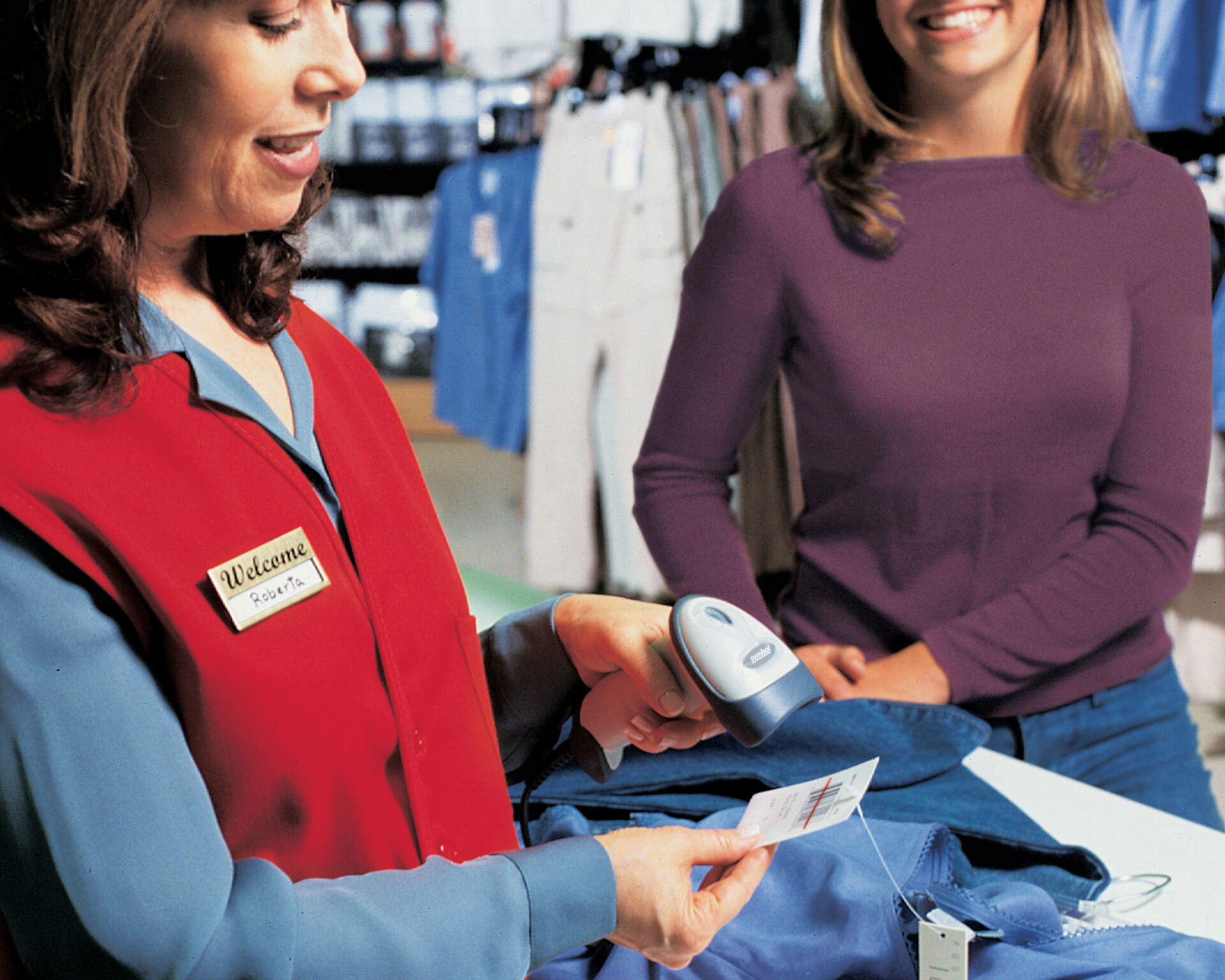
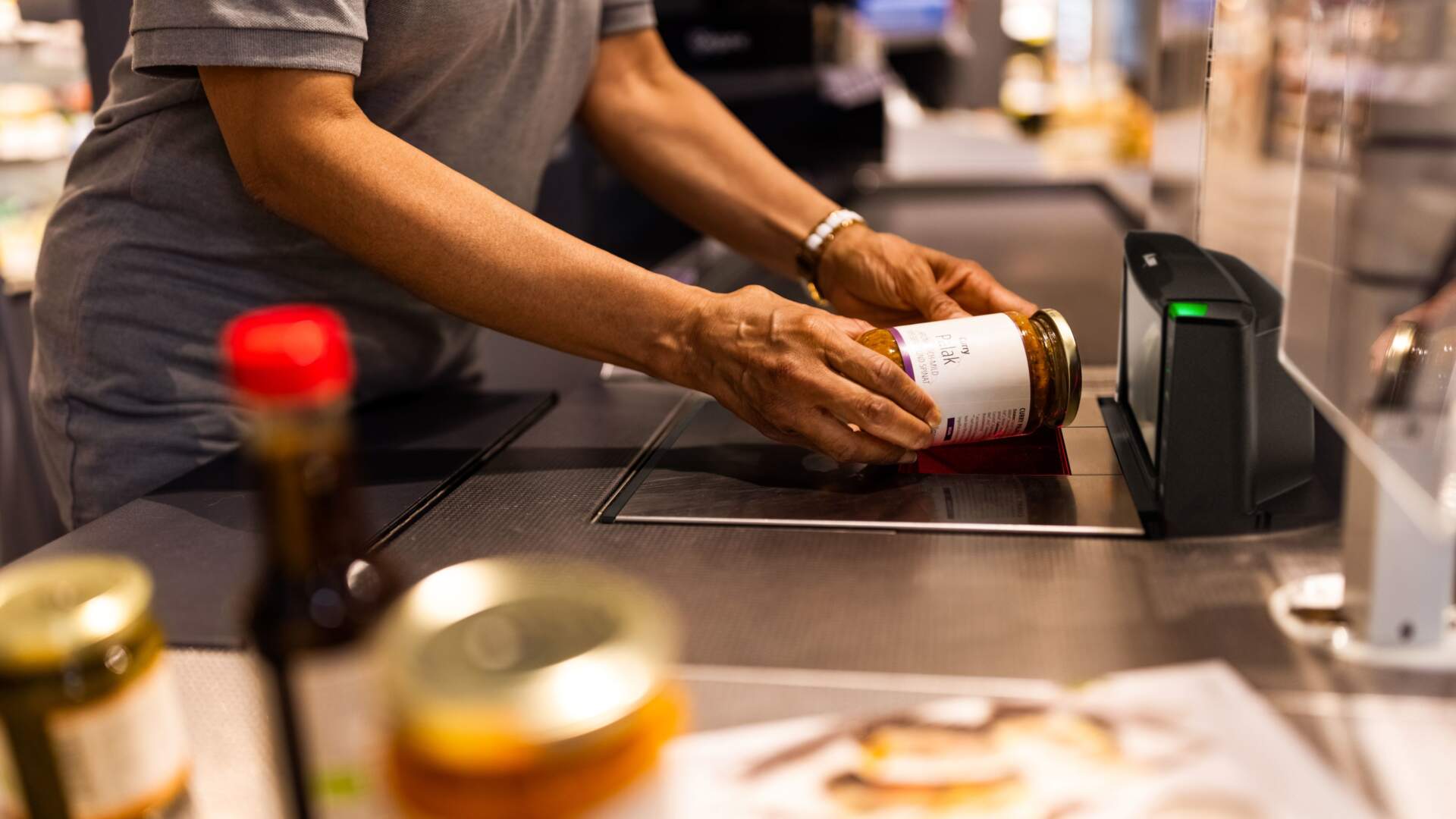
Test counter scanners, presentation or fixed devices, POS host versions and checkout actions. A scanner specification sheet is not an acceptance test.
Brands and suppliers
Control symbol size, package placement, data length, coexistence with the linear POS code, and ownership of destination content.
System teams
Prove that POS, ERP, WMS and ecommerce applications parse, store and pass the required fields, including unknown or malformed data.
QR decode capability does not make the POS ready
The device may read the code while the host truncates the string, maps it to the wrong field, or fails to complete the price lookup. Acceptance should end with the expected business action.
End-to-end readiness
Five layers must work together

| Layer | Questions to settle | Useful evidence |
|---|---|---|
| Packaging and print | Symbol, size, quiet zone, colour, material, curvature, adhesive and production settings. | Samples printed by the intended process and formal barcode-quality verification where required. |
| Capture devices | Paper, film, glare, curves and phone screens at the real distance, angle and pace of work. | Test records for the named device model, firmware, interface and configuration. |
| POS and applications | Decoded format, prefixes and suffixes, field parsing, price lookup, returns and errors. | A trace from scan event to the completed transaction and expected record. |
| Master data | Who creates, updates and approves GTIN, lot, expiry, serial and other attributes. | Field definitions, data owners, update rules and exception ownership. |
| URLs and content | Domain ownership, redirects, languages, content updates, outages, security and privacy. | A maintained destination register with access rights and failure handling. |
Hong Kong B2B scenarios
Readiness work changes with the organisation’s role
Many Hong Kong businesses handle imported products, private-label packaging, local relabelling and cross-border ecommerce at the same time. Map responsibilities before asking one vendor to solve the entire programme.
Retail chains
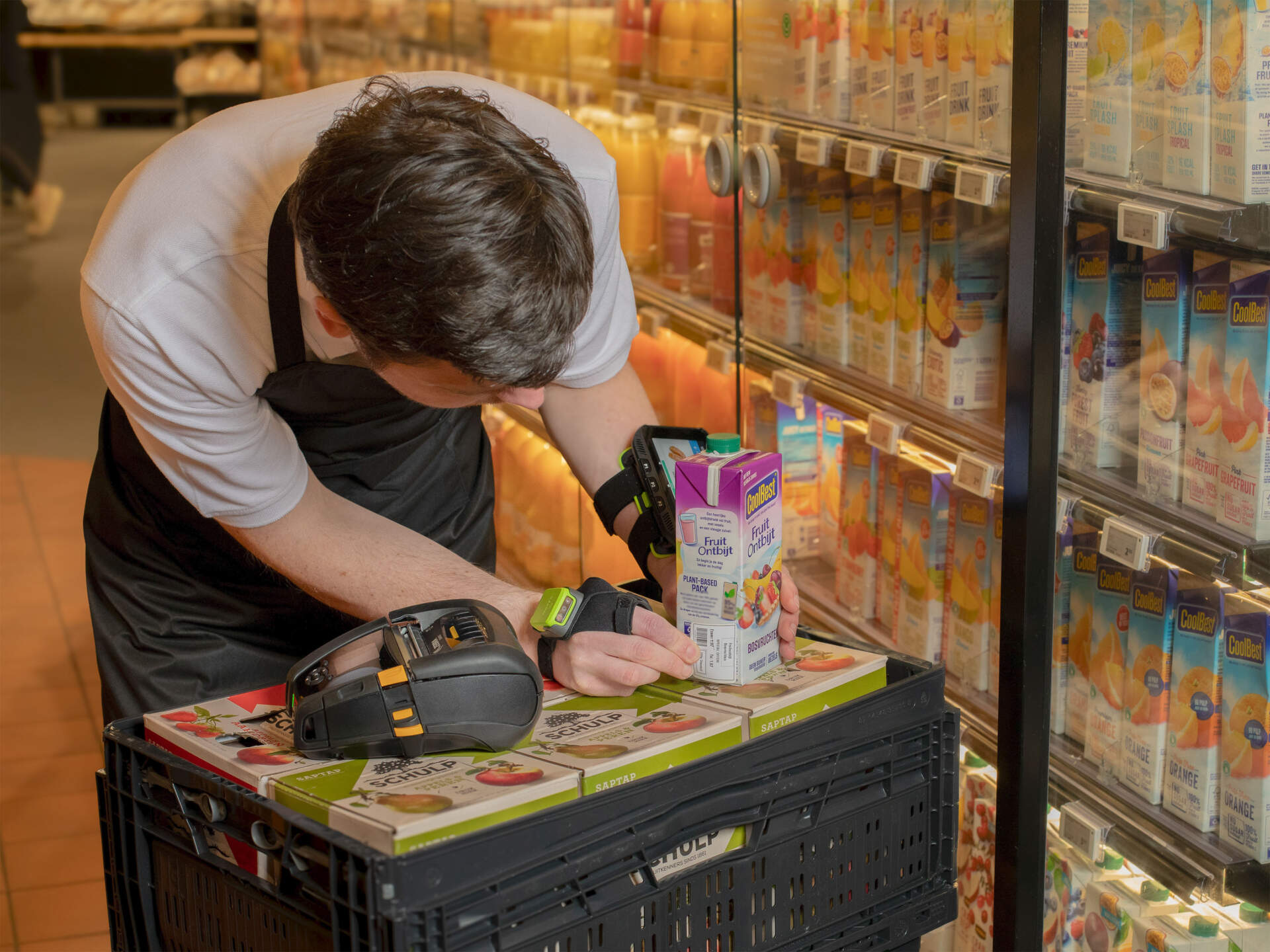
Inventory scanner models and POS versions by store. Test counter operation, customer-phone screens and staff exception handling.
Brands and manufacturers
Test size, placement, data length and production material before packaging artwork is frozen.
Importers and distributors
Obtain physical packs and data definitions from suppliers. Separate original product marks from local relabelling and warehouse codes.
Logistics and ecommerce
Check whether receiving, picking, packing and dispatch use one identity or require a controlled cross-reference.
If frontline staff also need screens, quantity entry, photographs or WMS updates, compare a barcode scanner with a mobile computer before defining the pilot device.
Data and web destinations
The code identifies the product; destination content still needs an owner
A brand can begin on its own domain with a simple one-code-to-one-page redirect. A resolver can be added later when the same product identity needs different links by language, resource type or context. It need not be the first implementation step.
- Name the owner of the domain, redirects, product content and each language version.
- Define what happens when a product is discontinued, recalled, reformulated or moved to a new page.
- Keep consumer web content separate from the data required to complete an offline checkout.
- Control access and retention for lot, expiry, serial or other sensitive information.
- Record test URIs, expected responses and change owners so every redirect change can be retested.
Packaging and quality
Artwork approval does not prove production readability
Data and domain length affect the size of a 2D symbol. Production introduces quiet zones, contrast, package curves, transparent or reflective material, laminate, folds and abrasion. Test difficult samples made by the intended print process.
Visual inspection
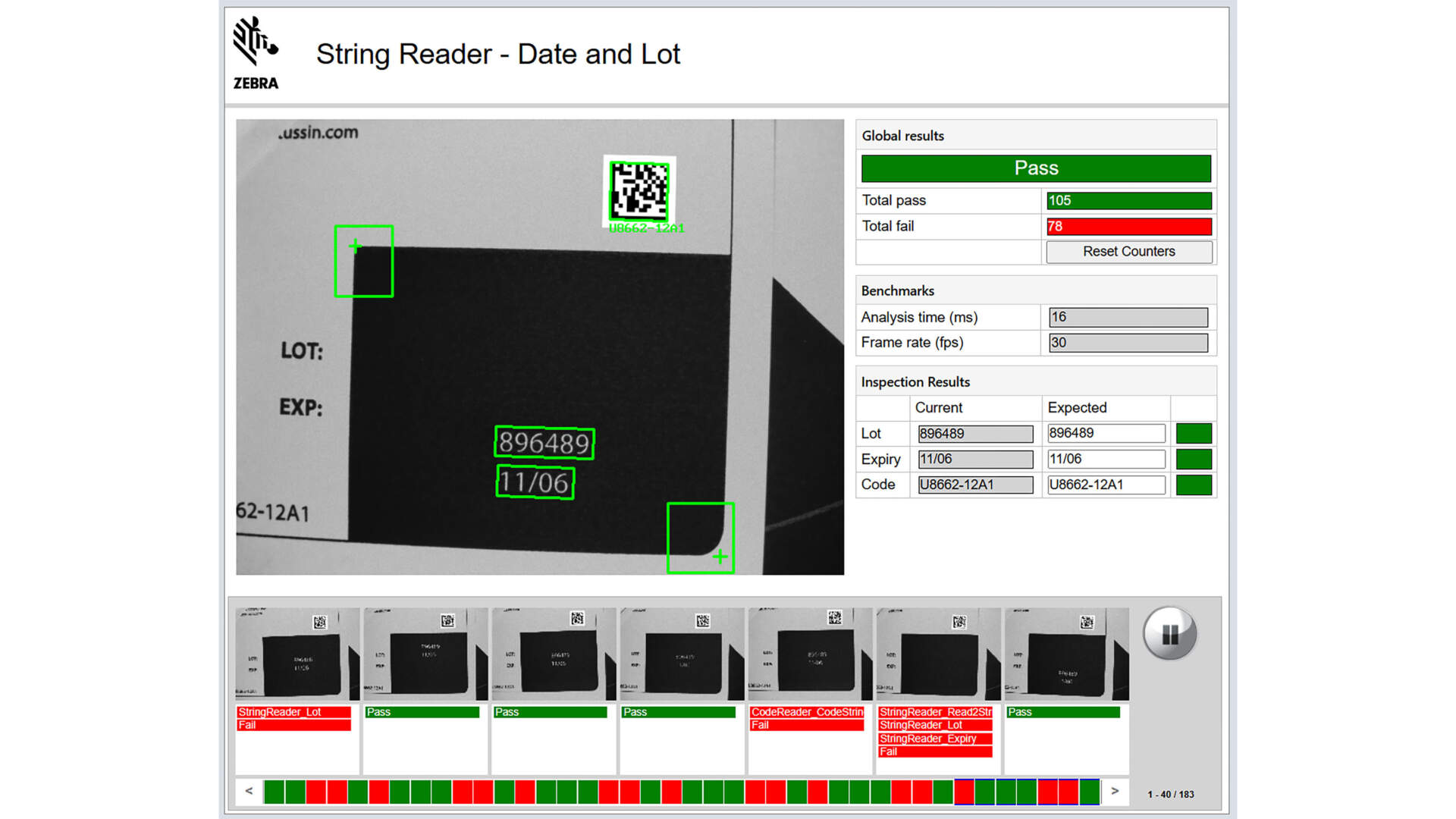
Finds smudges, broken areas, wrinkles, misalignment and obvious contrast problems. It does not produce a formal quality grade.
Representative scan test
Shows whether the named device reads the sample at realistic distance, angle, speed and lighting.
Barcode verification
Measures symbol quality against the applicable standard. It does not validate the web destination or its content.
Controlled pilot
Run a real item through the complete transaction

- Define the use case.Separate GTIN-at-checkout needs from lot, expiry, serial, traceability and consumer-link requirements.
- Collect real samples.Include production-like packaging, local over-labels, phone screens, smallest packs and longest data.
- Keep linear coexistence.Do not remove the existing POS linear barcode until the relevant trading network is ready.
- Freeze device settings.Record scanner model, firmware, interface, decoders and output configuration.
- Prove host processing.Confirm that POS, ERP or WMS receives the right fields and completes the expected price, stock, return or receipt action.
- Test destinations.Check language, redirects, access and the response when online content is unavailable.
- Add failure samples.Use damage, low contrast, glare, curvature, low phone brightness, network loss and unknown data.
- Release a small scope.Choose a limited product, supplier and store group, log exceptions, then decide whether to expand.
| Acceptance point | Pass condition | Insufficient evidence |
|---|---|---|
| Decode | Every named scan point reads the intended data set. | One successful scan in a demo room. |
| Transaction | The host maps the fields correctly and completes the business action. | A text string appearing at the cursor. |
| Packaging | Production material, placement and symbol quality meet the required criteria. | A clean artwork file on screen. |
| Exceptions | Unknown, duplicate, unreadable and unavailable-link cases have defined handling. | Testing only the perfect sample. |
Common misconceptions
Five assumptions that create avoidable rework

- “Linear barcodes stop working after 2027.”The target concerns POS capability; linear and 2D carriers continue to coexist where needed.
- “Every QR Code is GS1 Digital Link.”A generic QR Code may contain no GS1 identifier or Digital Link URI syntax.
- “If it scans, the work is complete.”The host still needs to parse the data, find the right record and complete the transaction.
- “A resolver is mandatory on day one.”A brand can start with a one-to-one redirect on its own domain, then add resource choices later.
- “A scan test is formal verification.”Representative workflow testing and standards-based barcode-quality verification provide different evidence.
Inputs before selection
Prepare this information before speaking to vendors or internal IT

- Workflows: checkout, receiving, put-away, stocktake, picking, packing, returns and customer self-service.
- Samples: current linear code, candidate 2D code, smallest pack, curves, reflective material and phone screens.
- Data: GTIN plus any lot, expiry, serial or other attribute that the process genuinely uses.
- Versions: each scanner, POS, ERP, WMS, ecommerce application, driver and middleware component.
- Web ownership: domain, languages, content owner, redirect access and retirement policy.
- Transition rules: coexistence period, supplier briefing, relabelling and handling of unknown symbols.
- Acceptance: named samples, environments, transactions, failure cases, pass criteria and sign-off owners.
If device selection is still open, use the Hong Kong retail barcode scanner guide to narrow the format, then validate the shortlisted model with real codes and host transactions.


Frequently asked questions
2D Barcode and GS1 Digital Link FAQ
Does Sunrise 2027 require every linear barcode to be removed?
No. The target is for retail POS systems to read and process the GTIN from linear and GS1-compliant 2D barcodes by the end of 2027. Linear carriers remain useful and will coexist with 2D carriers.
Is every QR Code on packaging a GS1 Digital Link?
No. A generic QR Code may contain an ordinary URL or text. GS1 Digital Link uses a defined URI syntax to express GS1 identifiers.
Our scanners read QR Codes. What else must we test?
Test real packs, phone screens, device output and the full POS, ERP or WMS transaction. Hardware decode is only the first step; the host must parse and use the data correctly.
Must we operate a resolver to use GS1 Digital Link?
No. A brand can begin with a simple redirect from its own domain to one page. A resolver becomes useful when one identity needs several resource links or context-dependent responses.
Should a package carry both linear and 2D barcodes during transition?
Keep the existing POS linear barcode until the relevant retail network and trading partners have verified readiness. Confirm the arrangement against current GS1 guidance and partner requirements.
Can the 2D barcode include lot, expiry or serial data?
It can carry data required by the selected GS1 structure and use case. More data can enlarge the symbol, so confirm that the host needs those fields and that production printing remains suitable.
Does a successful scan prove barcode quality?
No. A representative scan test shows that a named workflow can read the sample. Formal verification measures symbol quality against an applicable standard. Some projects need both.
Which team should own the project?
Packaging or procurement, retail operations, IT, master-data and digital-content teams often share responsibility. Assign one owner for each layer and one project lead for samples, tests and change control.
Implementation and test support
Planning a 2D barcode, POS or supply-chain pilot?
Send the current barcode, candidate 2D code, physical pack, scan locations, POS or backend versions and expected transaction. Easy Scan can help define the test scope, device direction and end-to-end acceptance checks.